Have you ever wondered whether honey bees and the dandelions growing around their hives are connected by more than just pollen and nectar?
Beyond what we can see, both are part of a complex microbial world. Modern genetic methods allow us to explore these hidden microbial communities and better understand their potential roles in nature.
What did we investigate?
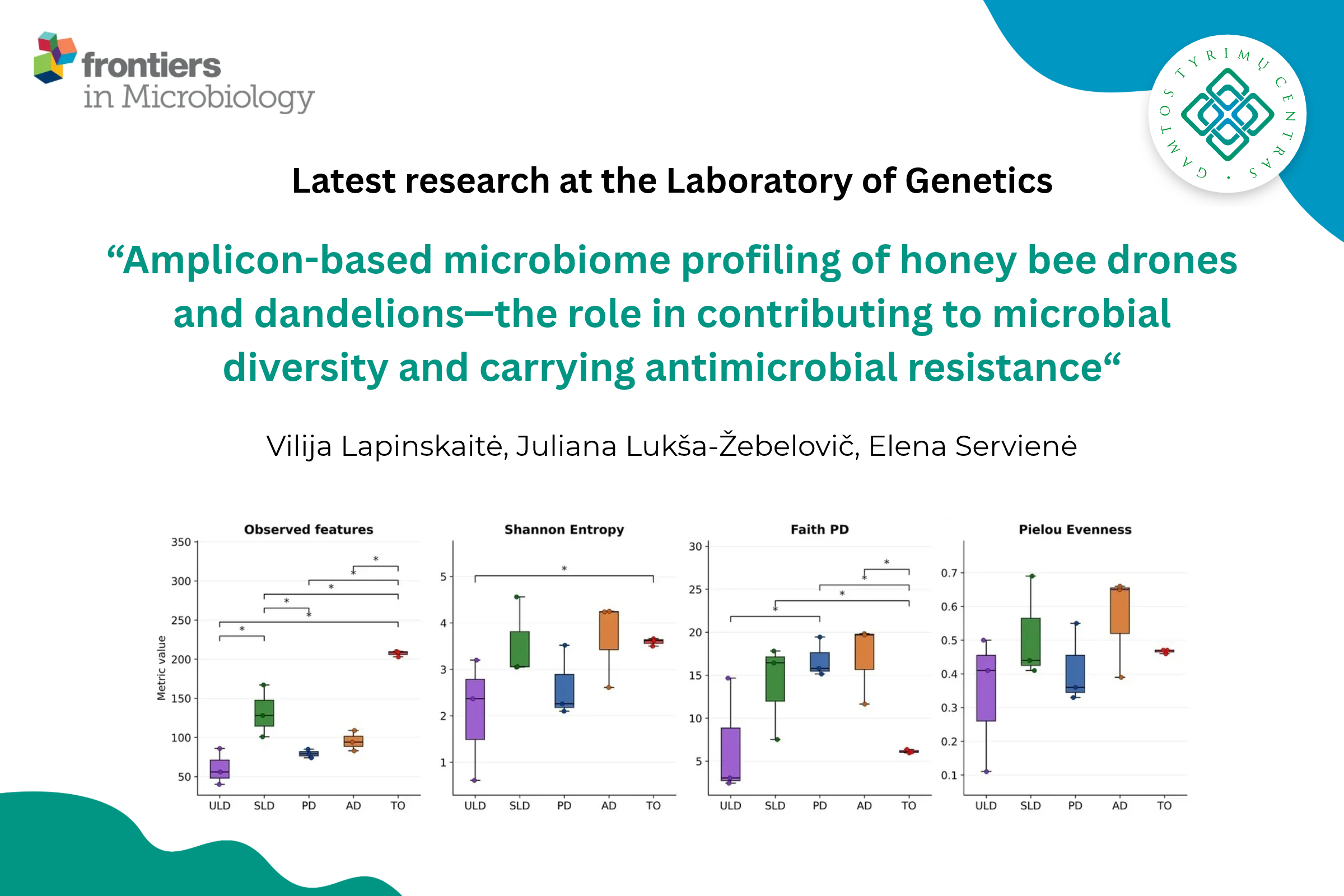
In our study, we analysed bacterial communities associated with honey bee drones (male honey bees) at different developmental stages – from larvae to pupae and adults – as well as bacteria found on dandelion flowers growing near the hives.
Using next-generation sequencing and molecular genetic methods, we explored the diversity of these microbial communities and investigated the presence of genes associated with antimicrobial resistance.
What did we discover?
- The bacterial communities differed between the developmental stages of honey bee drones and dandelion flowers.
- Microorganisms potentially beneficial to bee health were detected at all developmental stages, with greater diversity of these beneficial microorganisms observed in the larval stages.
- Dandelion flowers hosted a distinct bacterial community, including microorganisms previously associated with both beneficial effects on plants and plant diseases.
- Some bacterial groups were shared between honey bee drones and dandelion flowers. These included microorganisms potentially important for bee health, as well as bacteria associated with bee diseases.
- Genes associated with antimicrobial resistance were detected in both honey bee and dandelion samples. The most prevalent were genes linked to resistance to tetracyclines and sulfonamides.
Why does this matter?
Microorganisms are an essential part of natural ecosystems. They influence the health of plants and animals, participate in complex ecological interactions and contribute to biodiversity.
Our findings highlight that honey bee drones – often overlooked in microbiome research – may play a role in maintaining microbial diversity within bee colonies.
The study also draws attention to the presence of antimicrobial resistance genes in the environment. Understanding where these genes occur and how they are distributed is important for addressing the growing global challenge of antimicrobial resistance.
This research reminds us that even familiar elements of nature, such as honey bees and common dandelions, are part of a much more complex microbial world than we might imagine.
📖 Read more: https://doi.org/10.3389/fmicb.2026.1987395
This research is funded by the Research Council of Lithuania (LMT), project No. S-MIP-24-55.