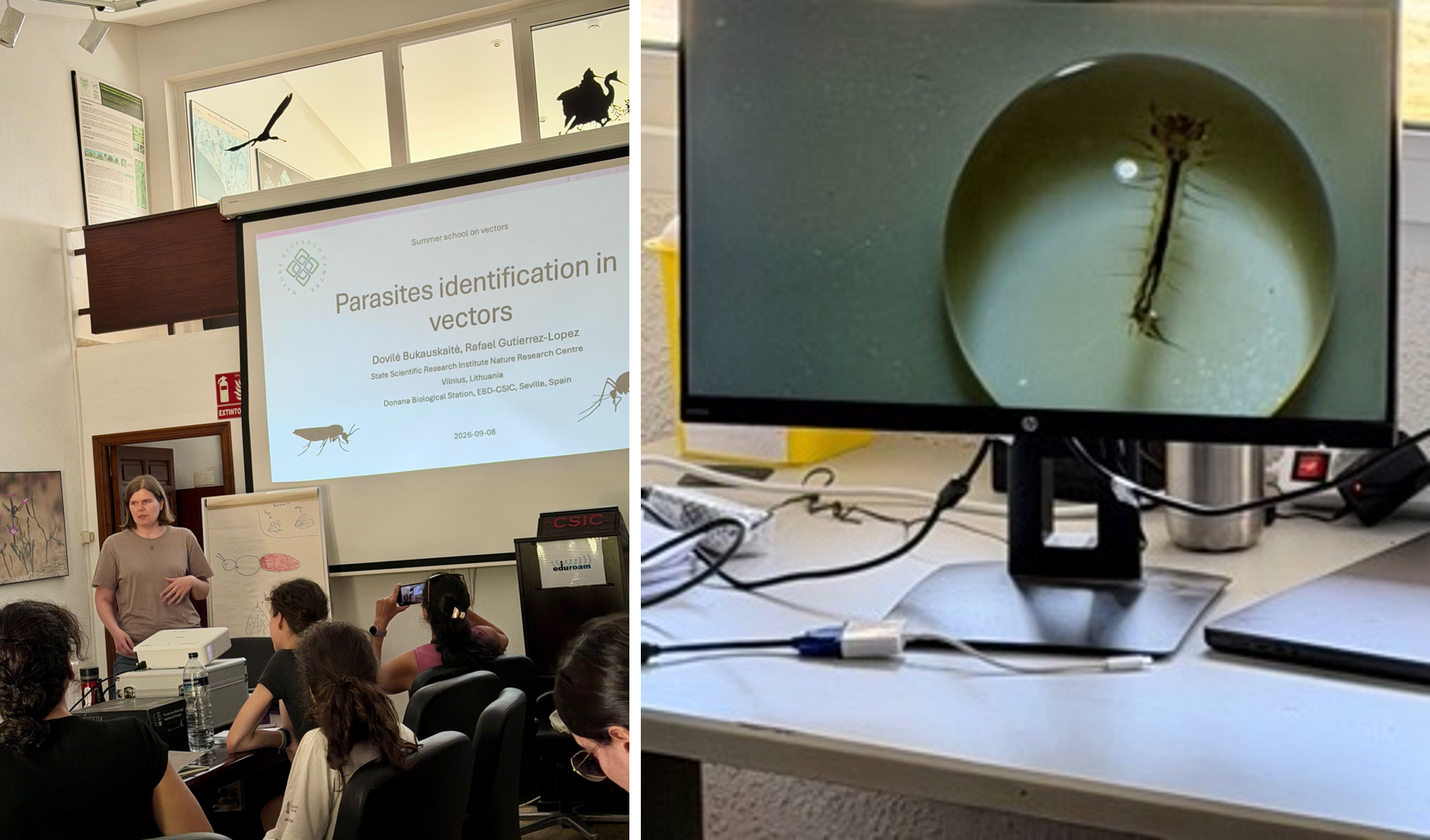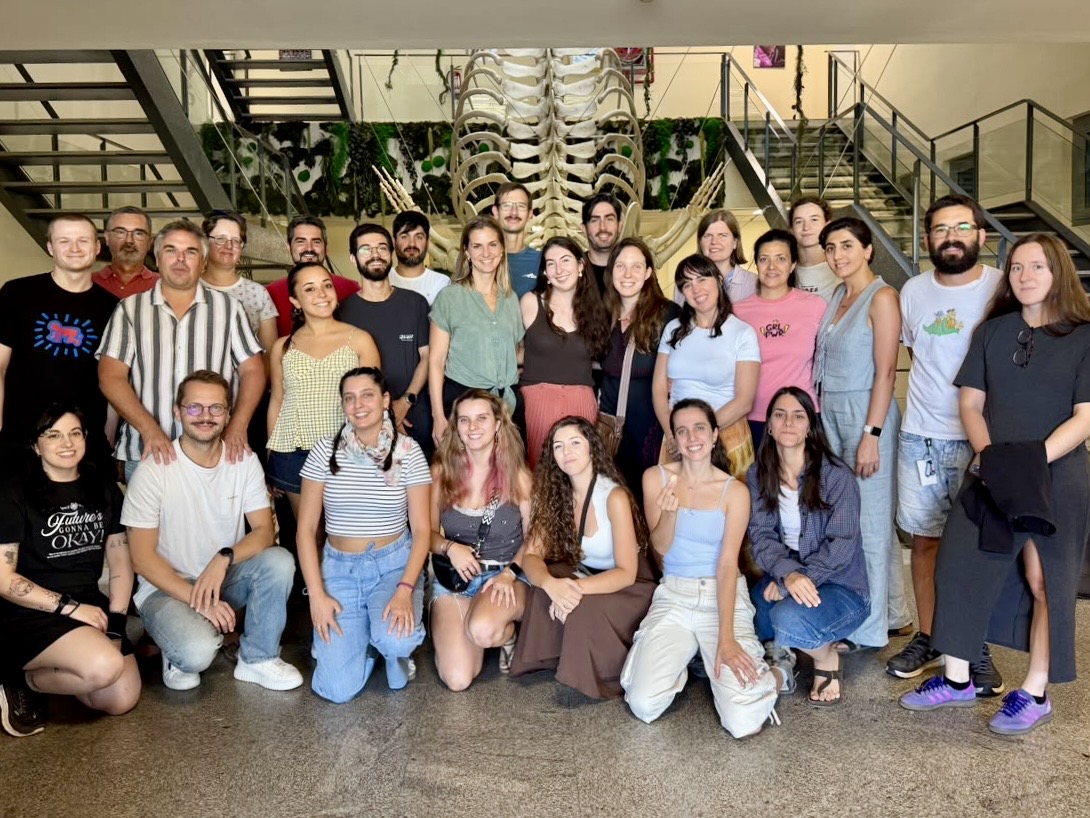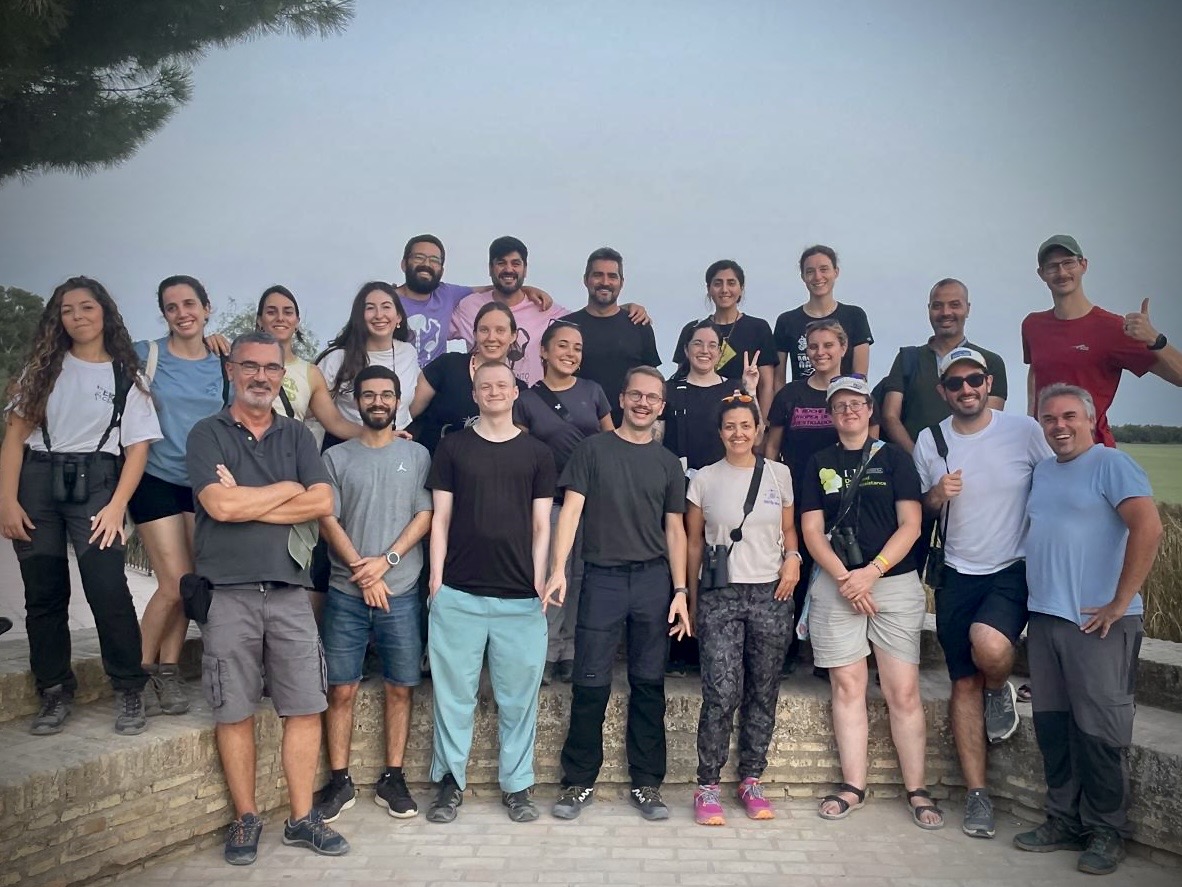
On 7–11 September, Dr. Vaidas Palinauskas and Dr. Dovilė Bukauskaitė participated in the international student summer school “Summer School on Vectors: from insect capture to -omics” organised by COST Action WIMANET and held at the Doñana National Park and in the Doñana Biological Station (Estación Biológica de Doñana, CSIC) in Seville (Spain).
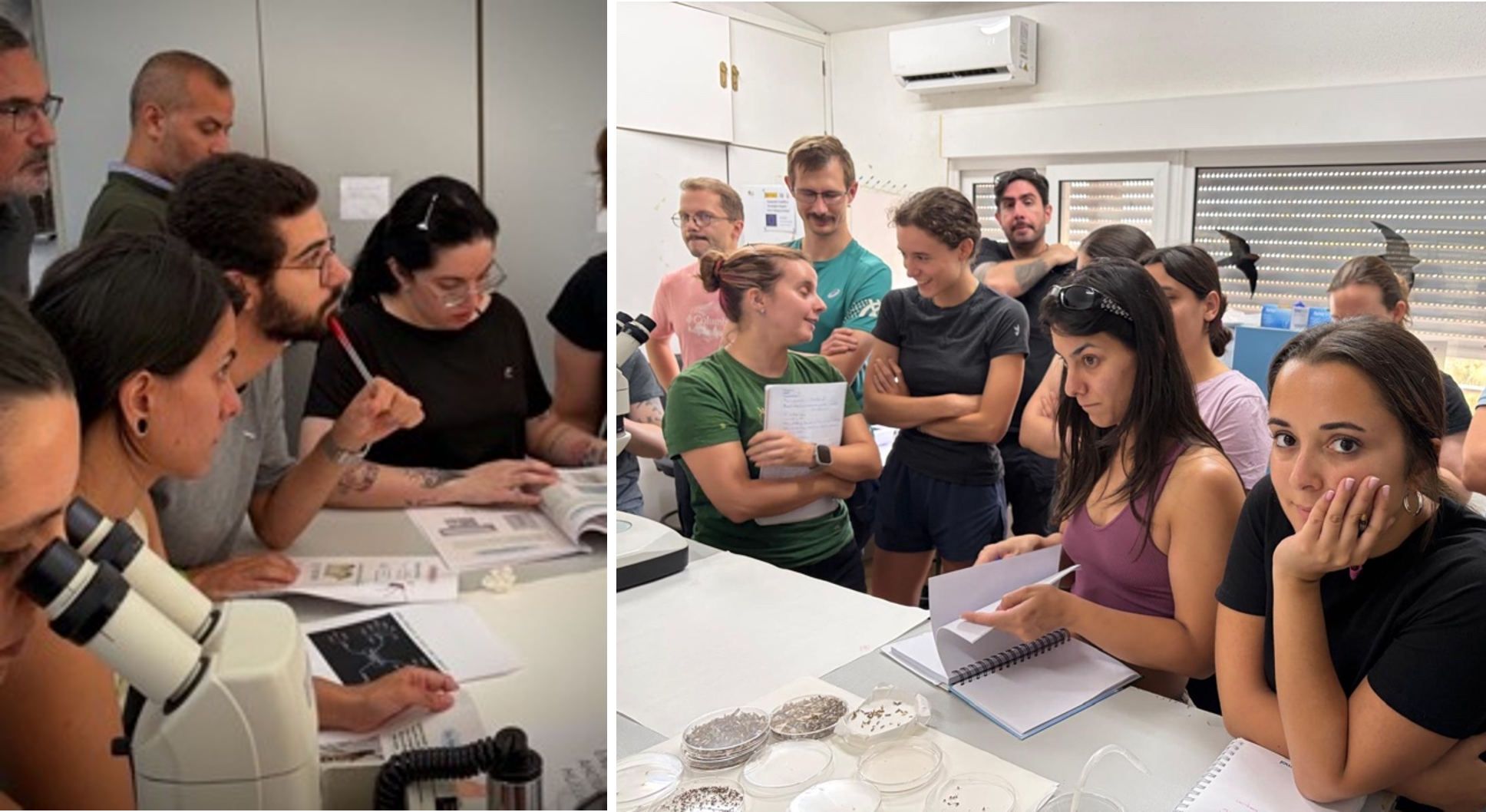
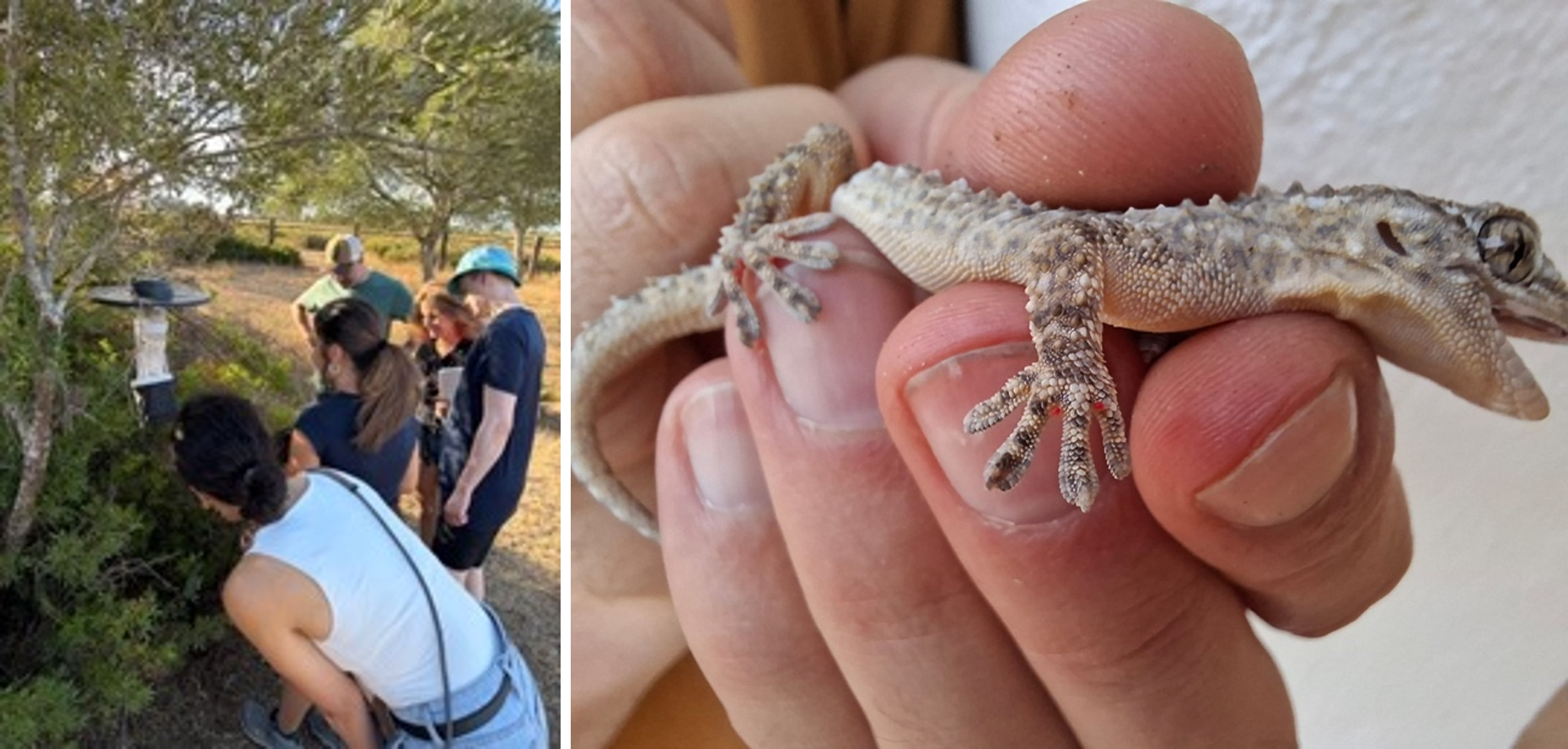
The summer school was intended to familiarise early career researchers with parasite research: from collecting parasite vectors in the field and identifying their vectors to conducting experimental work and performing state-of-the-art molecular and -omics analyses in the laboratory. More than 20 students from various countries of Europe, Africa and South America, including NRC doctoral student Claudio Navarrete, participated in the training. At the Doñana National Park, where participants spent the first part of the training, intensive field and laboratory training took place: introduction to vector trapping methods (CDC, BG traps, etc.), tick collection and identification, extraction of mosquito salivary glands, and vector competence studies. In addition, the identification of parasites in vectors and the molecular identification of blood sources in blood-sucking mosquitoes and biting midges were performed.
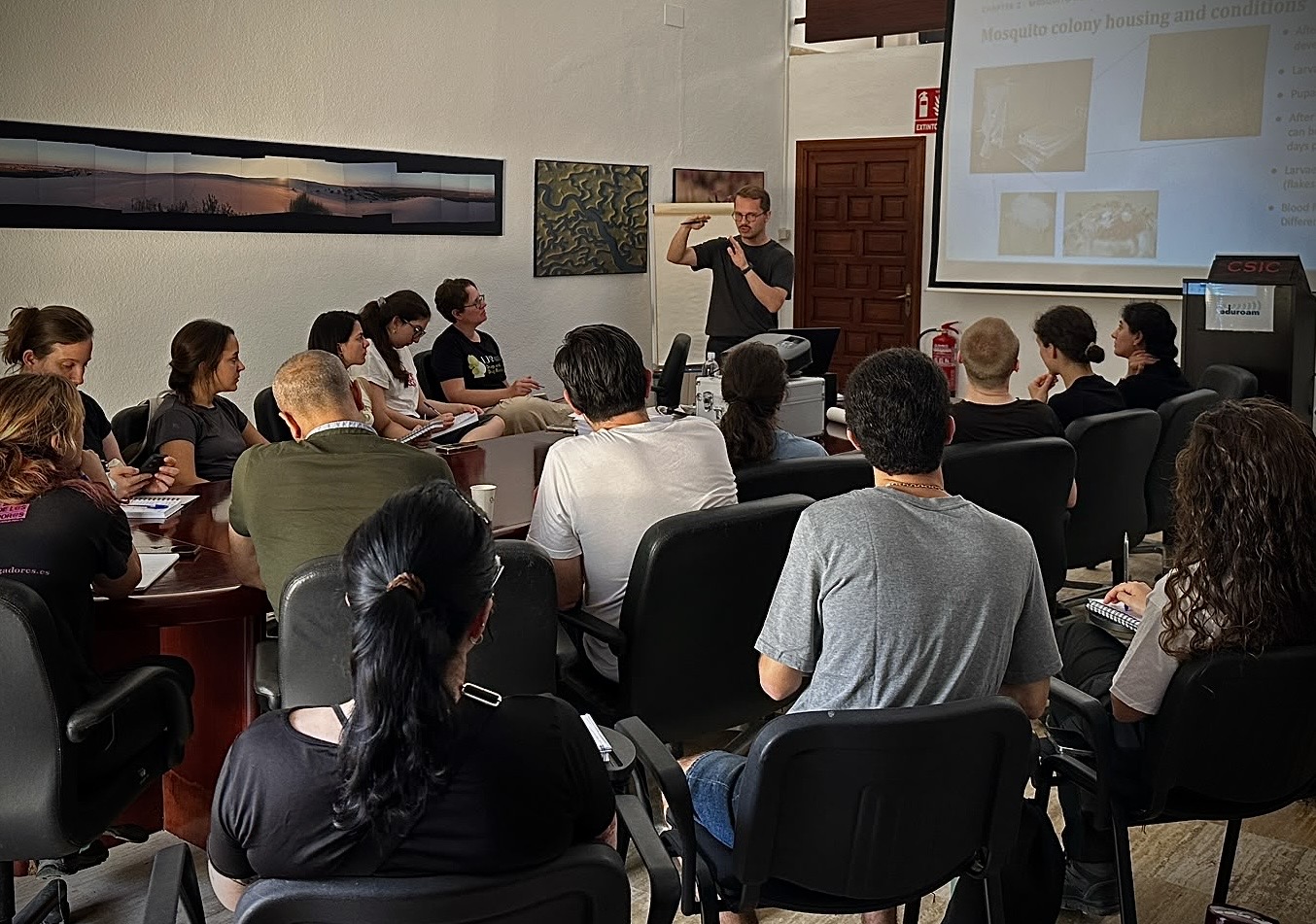
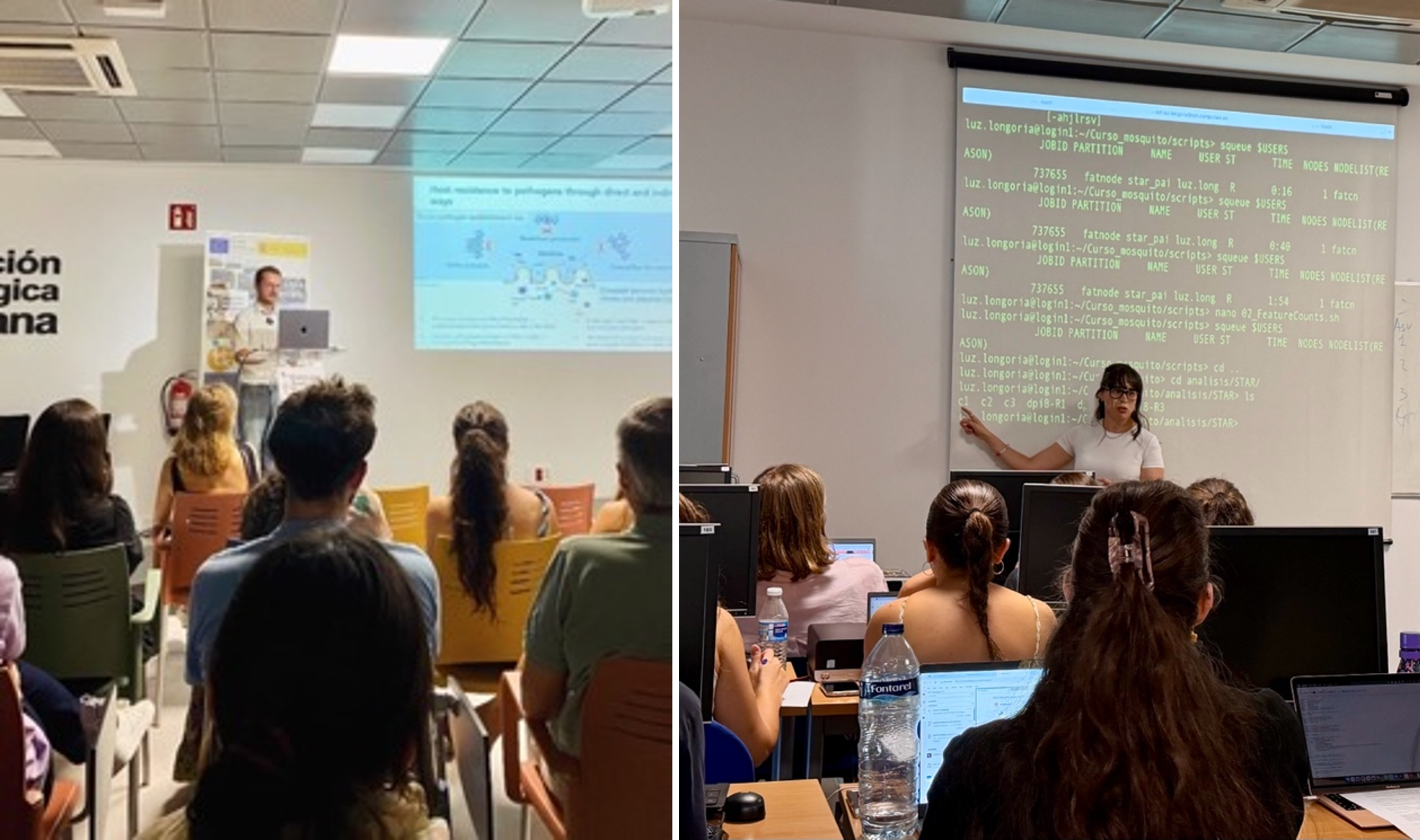
Dr. Vaidas Palinauskas delivered a presentation “Experimental infections in mosquitoes and biting midges,” in which he reviewed methods for maintaining insect colonies, infecting mosquitoes and midges, and caring for them after infection. He made an oral presentation to students and researchers of the Doñana Biological Station on interactions between birds, their microbiota, and blood parasites. Dr. Dovilė Bukauskaitė made a presentation “Parasite identification in vectors” and led a hands-on session during which students performed dissections of mosquitoes and biting midges and learned to identify the parasites found in them. The second part of the training took place in Seville, where the school’s activities continued at the main building of the Doñana Biological Station where practical sessions were held on the analysis of mosquito microbiomes and on the processing of RNA sequencing (RNA-seq) data and transcriptomic analysis.
The summer school was coordinated by Dr. Josué Martínez de la Puente, chair of the WIMANET WG3 group, along with his team (Dr. Martina Ferraguti, Rafael Gutiérrez-López, and Dr. Jesús Veiga); they were also assisted by the vice chair, Dr. Carolina Chagas. The aim of the training was to strengthen international collaboration and provide early career researchers with an opportunity to acquire practical skills needed for studying malaria pathogens in wild animals and their vectors.
More information on WIMANET network: https://wimanet-science.github.io/web/
Photos from the summer school