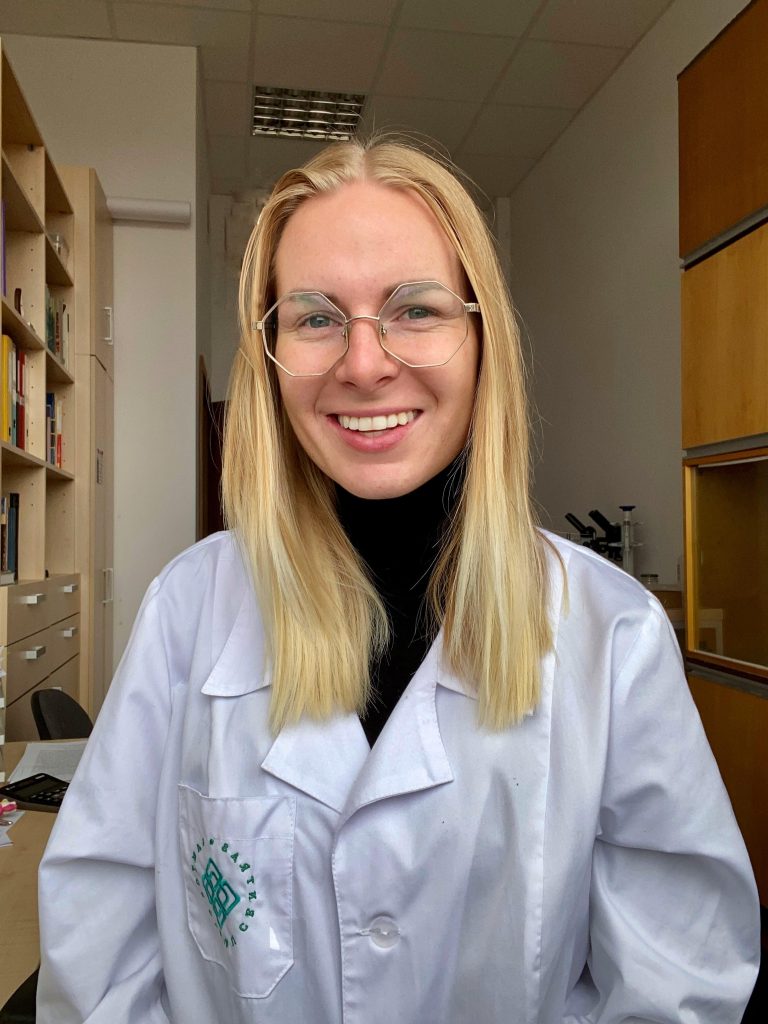
Congratulations to PhD student Gabrielė Bumbulytė on receiving support from the Lithuanian Research Council for PhD students for the results of studies in 2024.
The aim of the grant is to support productive PhD students.
2024.03.06
Congratulations to PhD student Gabrielė Bumbulytė on receiving support from the Lithuanian Research Council for PhD students for the results of studies in 2024.
The aim of the grant is to support productive PhD students.
2024.03.04
Within the framework of the annual Young Scientists and Doctoral Students Competitions arranged by the Lithuanian Academy of Sciences (LAS), the 2023 LAS prizes and LAS Letters of Commendation were awarded to NRC researchers. Dr. Živilė Jurgelėnė, Senior Researcher at the Laboratory of Ecotoxicology, Nature Research Centre, was awarded the prize for her research paper “Bioaccumulation, toxicity and risk assessment of next-generation nanoparticles: towards safe use of nanoparticles in biomedicine and environment”. Dr. Mélanie Yvonne Ludivine Duc, Researcher at the P. B. Šivickis Laboratory of Parasitology, Nature Research Centre, was awarded for her research work “Exoerythrocytic stages of Haemoproteus (Apicomplexa, Haemosporida) parasites in wild birds: insights into developmental patterns”.
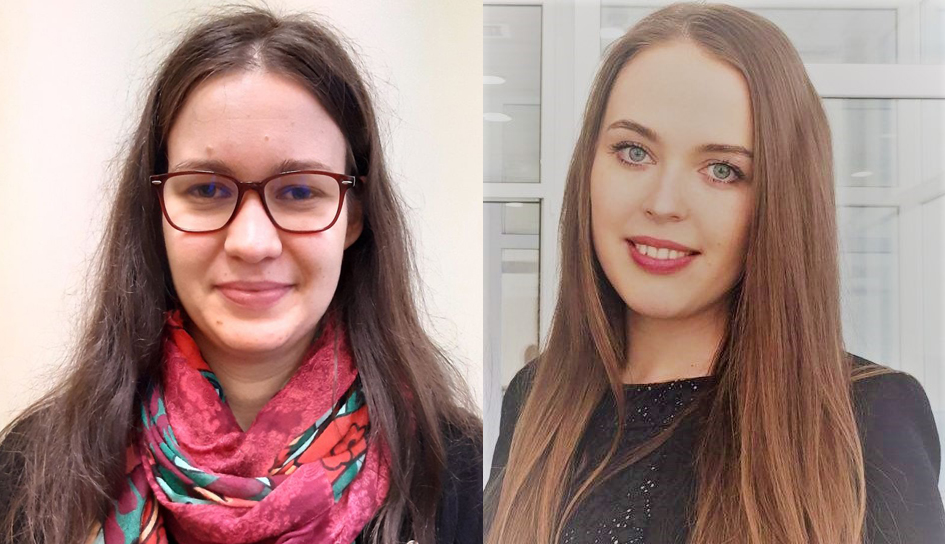
We sincerely congratulate the winners and wish them every success in their scientific endeavours!
2024.02.29
Sincere congratulation to our colleague Dr. Valerijus Rashomavičius, Chairperson of the Scientific Council of the Nature Research Centre, Head of the Laboratory of Flora and Geobotany, who has been awarded by the State Lithuanian Language Commission for the promotion of the Lithuanian language. The awards are given for significant work in the development of Lithuanian terminology, the promotion of the scientific language and linguistic education of the public.
“I am a botanist. Of course, I’m a botanist, but I have a flair for language”, he said and assured that the Lithuanian language is perfectly suited for creating terms. The botanist focuses on linguists Jurgis Pabrėžas and Laurynas Ivinskis.
2024.02.26
On 23 February 2024, the 120th anniversary of the geologist, geomorphologist, and long-time researcher at the Institute of Geology and Geography, Dr. habil. Valerija Čepulytė, was celebrated at the Conference Hall of the Nature Research Centre. Although the time she lived in is slowly sinking into oblivion, it is still joyful to remember her work and her contribution to the study of the surface of Lithuania.
A pleasant surprise was our community’s collaboration in restoring the tombstone bas-relief (author G. Raudonius) that had been stolen by thieves, in preparing the exhibition (by S. Dagienė and A. Trumpienė), a virtual version of which is available at: http://eparodos.mab.lt/s/mokslui-paaukotas-gyvenimas-habil-dr-valerijai-cepulytei-120, and a cordial meeting at which Dr. habil. V. Baltrūnas delivered a detailed presentation on the life and the most important works of the scholar. Memories were shared by Prof. A. Grigelis, Dr. E. Ž. Gelumbauskaitė, Dr. V. Narbutas, Assoc. Prof. Dr. V. Kadūnas and Dr. Z. Malinauskas.
Sincere thanks to those who donated funds for the bas-relief and contributed to the organisation of the event.
2024.02.23
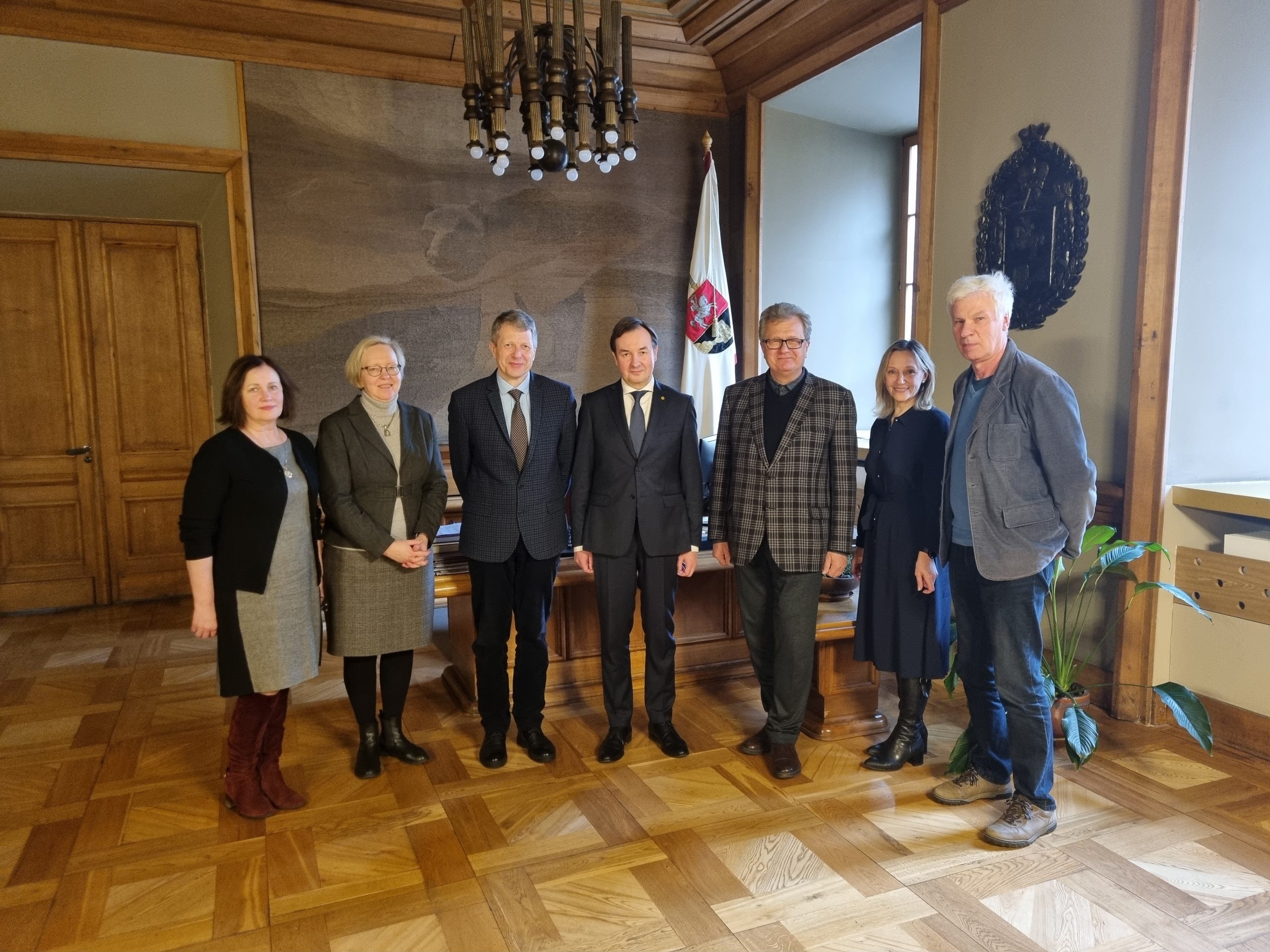
The participants of the meeting discussed the possibilities of expanding the content of classical biology and geosciences studies at VU by using the intellectual and technical potential of the NRC and the opportunities and prospects for VU students to carry out internships and final bachelor’s and master’s research projects at the NRC. A focus was put on common doctoral study programmes, evaluation of their development opportunities, including the prospects for attracting students from foreign countries. The issues tackled during the meeting regarding joint announcement of the topics of doctoral studies, opportunities for NRC doctoral students to have a better access to VU infrastructure, etc. will undoubtedly significantly contribute to the expansion of the third-cycle studies and to the quality assurance of doctoral studies in the institutions. Information exchange as an important part of inter-institutional cooperation, as well as the presentation of ongoing research and existing technical capacities to the other institution’s community were identified as an essential part of the planned activities.
The proposals and priorities for cooperation outlined during the meeting will significantly contribute to the development of joint research and study activities in the most important natural science research institutions in Lithuania.
2023.12.04
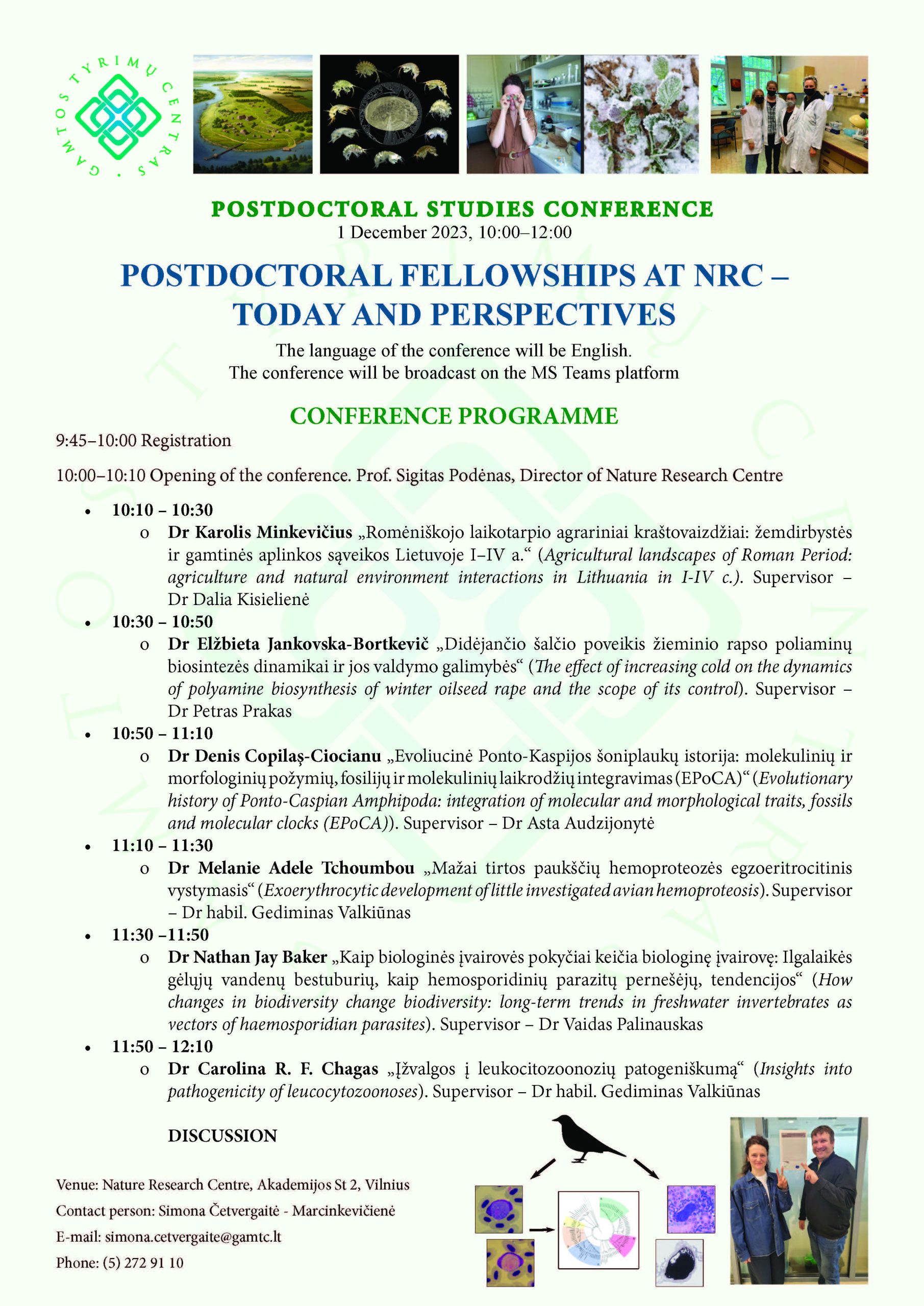
Nature Research Centre announces a competition for Additional Admission to state-funded full-time doctoral studies in the fields of Biology, Ecology and Environmental science, Physical Geography, Geology, Zoology
▶️ Submission of applications: till 7th of December, 2023
▶️ All the information and Doctoral research topics for candidates to doctoral studies admission 2023 and documents:
https://gamtostyrimai.lt/en/admission-to-studies/
2023.11.08
The bacterial contamination of meat is a global concern, especially for the risk of Salmonella infection that can lead to health issues. Artificial antibacterial compounds used to preserve fresh meat can have negative health effects. We investigated the potential of natural essential oils (EOs), namely Mentha arvensis (mint) and Cinnamomum cassia (cinnamon) EOs, to prevent contamination of the food pathogen, Salmonella enterica, in vitro and on chicken skin. The gas chromatography–mass spectrometry (GC-MS) technique was used to determine the compositions of mint EO (MEO) and cinnamon EO (CEO). The antibacterial activity of MEO and CEO were examined in vapor and direct contact with bacteria. The exploration of CEO and MEO employment for the inhibition of Salmonella bacteria at different temperatures and conditions expands the possibilities of developing more environment- and consumer-friendly antibacterial protection for raw meat.
2023.11.07
2023.10.27
A very interesting Nordic stakeholder workshop on Long-term Conservation and Access to Nordic Crop Wild Relatives took place 23-24 October 2023 in Helsinki, Finland.
It was quite intensive sharing of knowledge with presentations and discussions in separate subgroups on the following topics:
-Discussing aspects of long-term robustness of different protected area (PA) categories. Are all PAs equally suitable for CWR conservation? If not, what would the preferable model look like?
-MAWP (Most Appropriate Wild Population) is an adopted concept to help prioritizing CWR populations. Discuss whether we should apply the concept in our region and, if yes, how would we proceed?
-The availability of genetic resources – in our case a CWR – very likely depends upon the category of PA where the taxon grows. Could you envisage the development of a simplified procedure that would facilitate access? Discuss pros and cons.
In conclusion, it could be observed is that the regional approach (or subregional if viewed from the context of Europe as a region itself) is going to be more and more promising as there are at least several common things joining partner-countries including similar climatic conditions, species composition of the national floras, peoples‘ attitudes towards CWR and wild food species conservation, etc. What we need to do is to develop a common approach to CWR conservation planning which has been already started by the five Nordic countries, but should include the three Baltic states as well. A common information system on crop wild relatives for the region would also be a significant achievement in strengthening the regional cooperation.
Credits should be given to the Nordic Council of Ministers (NCM) which provides support through its representatives in all Baltic states to promote the regional collaboration. Total 41 participants including 6 from the Baltics, also from Spain, Portugal, Switzerland, took part in the workshop.
2023.10.20
Dr. Md. Reazuddin Repon, a scientific worker at the Plant Physiology Laboratory of Nature Research Centre, recently attended the 30th International Baltic Conference on Materials Engineering and Modern Manufacturing 2023. The conference took place on October 19 at Victoria Hotel in Kaunas, Lithuania, and brought together scientists and industry experts in materials engineering from the Baltics and other countries to exchange knowledge.
During the conference, Dr. Reazuddin presented his research titled “Cotton coloration using bio-waste extracts: A greener approach.” The coauthors of this work included Daiva Mikučionienė from Kaunas University of Technology, Sigita Jurkonienė from Nature Research Centre, and Tarikul Islam from the University of Georgia.
The investigation conducted by Dr. Reazuddin aimed to address the challenges of color fastness properties and limited color variety when applying natural dyes to textile coloration. In this study, cotton fabric was pre-mordanted with metallic salts to enhance dye fiber binding through a coordination bond formed between the fiber, metal, and dye.
All color fastness properties, except for light fastness, were greatly satisfied. However, the extent of color variety was not achieved to a high degree. In order to analyze the environmental hazards, the metals loading from the residual mordanting bath and dyeing wastewater were calculated. The amounts of residual metal ions in the mordant bath exceeded the acceptable limit set by environmental standards. However, the levels of trace metals found in the finished fabric were deemed not harmful to human health. Therefore, Dr. Reazuddin suggested further exploration to develop new methods of achieving a wider range of colors while ensuring improved color fastness and reducing the future use of metal salts.