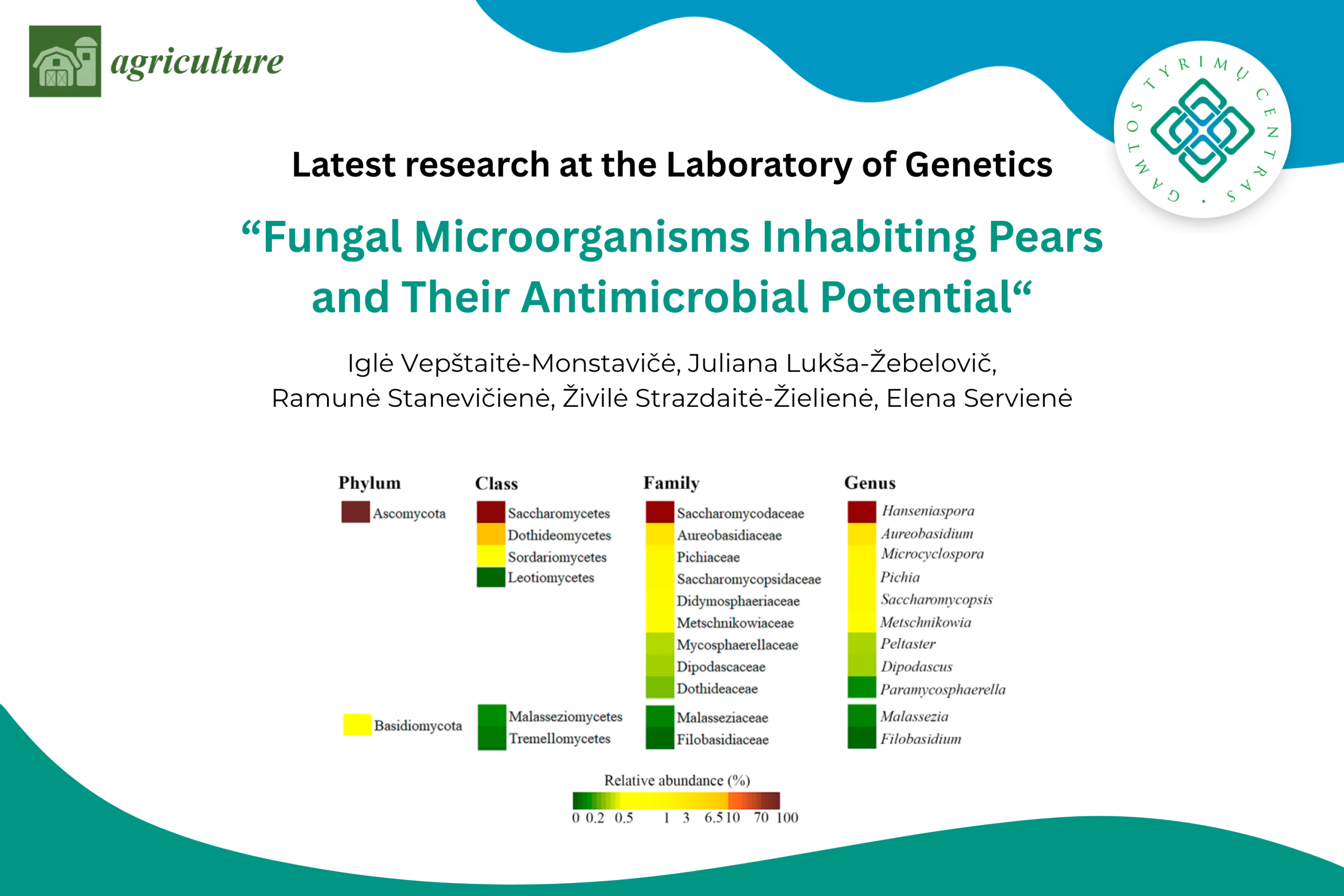
Researchers at the Laboratory of Genetics investigated fungal microorganisms naturally inhabiting pears and evaluated their ability to inhibit harmful pathogens. The study revealed that pears host a diverse fungal community, and several of these microorganisms possess significant antimicrobial properties. These naturally occurring fungi may serve as promising biological alternatives to chemical crop protection products. Certain yeast and fungal species demonstrated the ability to suppress plant pathogens, contributing to improved fruit health and postharvest preservation.
🔬 A high diversity of fungal microorganisms was identified on and within pear fruits.
🦠 Several isolates showed strong antimicrobial activity, effectively inhibiting the growth of plant-pathogenic fungi.
🍐 The natural pear microbiome may help protect fruits against spoilage and postharvest diseases.
🌱 Biological control approaches could reduce reliance on chemical fungicides, supporting more sustainable agricultural practices.
🚜 The findings highlight opportunities for developing innovative biocontrol products based on naturally occurring microorganisms associated with fruit.
According to the researchers, a deeper understanding of fruit-associated microbial communities could support the development of safer and more environmentally friendly plant protection strategies, while also contributing to sustainable food production and reduced chemical inputs in agriculture.
Read more: https://www.mdpi.com/2077-0472/16/12/1259